Direct mail continues to deliver strong response and conversion — but for many marketers, one challenge still lingers:
How do you accurately measure what direct mail contributed in a complex, multi-touch customer journey?
Between paid search, social, email, web activity, and in-store visits, direct mail rarely works alone anymore. It’s part of a broader ecosystem. And as marketing budgets face tighter scrutiny, proving ROI across channels is no longer optional — it’s required.
Today’s most successful brands aren’t just mailing smarter.
They’re measuring smarter and integrating direct mail directly into their digital ecosystems.
Why Direct Mail Attribution Is Still Challenging
Unlike digital ads that provide instant click data, direct mail has historically relied on delayed signals — phone calls, store traffic, or post-campaign sales lifts that were harder to attribute with precision.
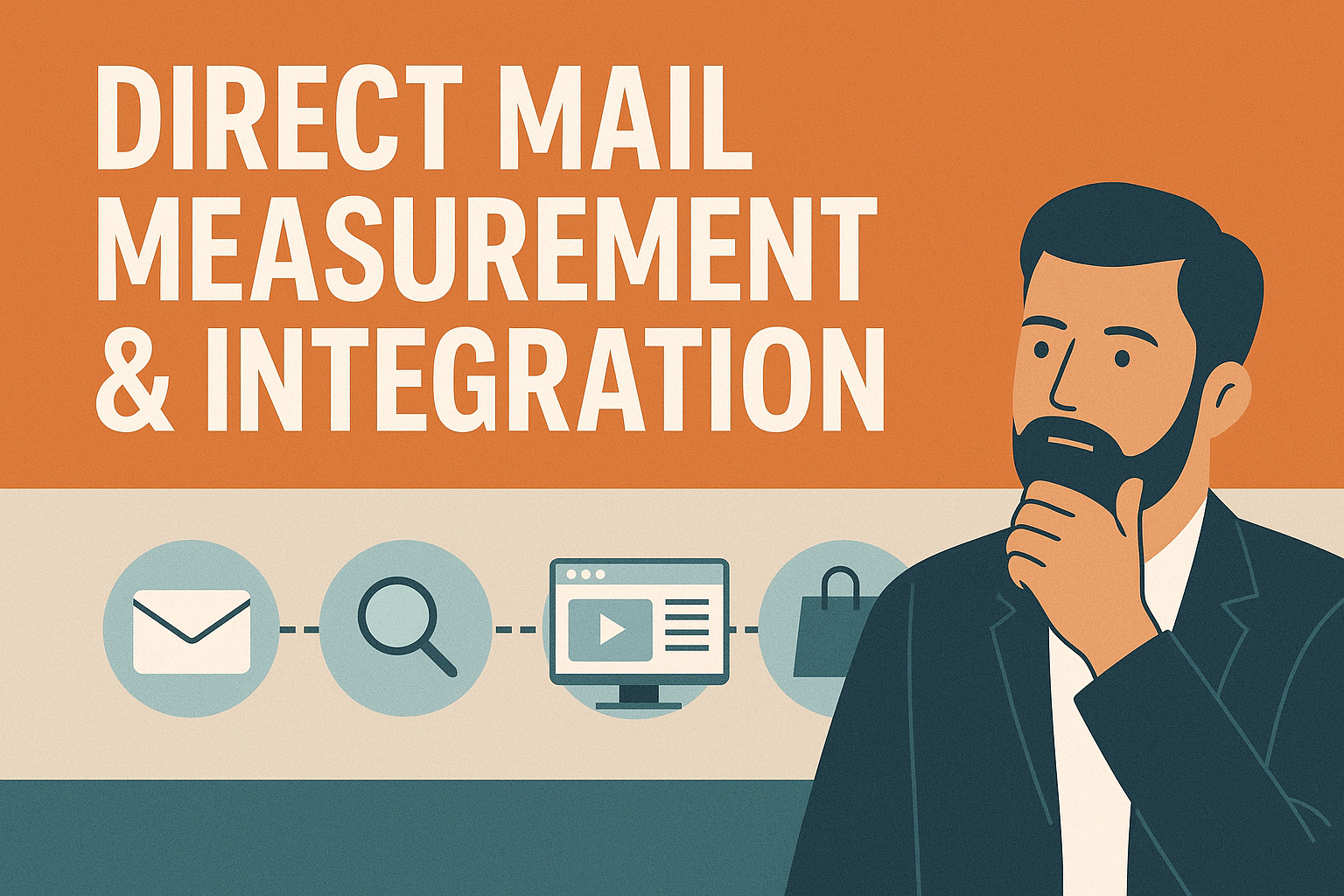
In multichannel funnels, a single conversion may involve:
- A direct mail piece
- A follow-up Google search
- A website visit
- A retargeting ad
- An in-store purchase
Without the right systems in place, direct mail often gets under-credited, even when it played a critical role in initiating or accelerating the decision.
This has created a lingering perception gap — not because direct mail doesn’t perform, but because its influence isn’t always fully visible.
Coupons, Barcodes & the Reality of Direct Mail Influence
Coupons and barcodes do provide one of the clearest direct indicators of attribution. When a customer redeems a coded offer, marketers can easily connect:
- The household mailed
- The offer received
- The product purchased
- The revenue generated
However, redemption only tells part of the story.
Many consumers are influenced by direct mail but never redeem the physical coupon. They may:
- Visit the store without the coupon
- Search the brand online
- Compare options
- Purchase later without a tracked code
This means direct mail’s true impact is often larger than what coupon data alone shows.
The same pattern holds true for in-store traffic:
Direct mail lifts store visits far beyond just those who physically redeem an offer. It drives awareness, intent, and consideration that show up in untracked—but very real—revenue.
Why the Preferred Next Step Is the Website — Not a Phone Call
For complex or higher-consideration purchases, consumer behavior has shifted.
Today, the preferred next step from a direct mail piece is not a phone call — it’s a website visit.
Consumers want to:
- Do additional research
- Compare options
- Read reviews
- Explore products and pricing
- Validate credibility
This makes website traffic one of the most important modern attribution signals for direct mail.
Direct mail is often the spark — but the website is where:
- Shoppers go further down the funnel
- Engagement deepens
- Conversions ultimately happen
Yet without proper tracking, that influence can be missed.
Digital Integration Is Closing the Attribution Gap
Modern direct mail programs are rapidly evolving from standalone campaigns into fully integrated, trackable marketing channels.
Today’s brands are increasingly pairing direct mail with:
- QR codes that drive directly to tracked landing pages
- PURLs (personalized URLs) tied to individual households
- Landing pages and form fills connected to CRM and analytics platforms
- Follow-up digital ads triggered after in-home delivery
- Email and SMS automation synced with mail drops
This integration bridges the physical and digital worlds, allowing marketers to see exactly how direct mail influences traffic, engagement, and conversion behavior.
When direct mail becomes a measurable trigger — not just a physical touch — attribution becomes far clearer and performance easier to justify.
From Volume to Value: The New Measurement Mindset
As postage, production, and acquisition costs continue to rise, marketers are shifting away from sheer mail volume and toward value-based performance measurement.
Instead of asking: “How many pieces did we send?”
Leading brands now ask: “How many qualified visits, store trips, and customers did we generate — and at what cost?”
That shift requires:
- Better audience targeting
- Cleaner data and attribution logic
- Website tracking and CRM visibility
- Unified reporting across mail, digital, and in-store behavior
The result is a more disciplined, ROI-focused approach to direct mail that mirrors how digital performance is already evaluated.
Why Measurement Strengthens Direct Mail’s Role in the Funnel
When direct mail is properly integrated and measured, it becomes easier to:
- Prove contribution to pipeline and revenue
- See how mail drives website traffic and research behavior
- Optimize audience segmentation based on real response signals
- Refine creative and offers using funnel data
- Justify budget allocation with confidence
- Align offline and online strategy under one performance framework
Rather than competing with digital channels, direct mail becomes the activation engine that fuels them.
The Future of Direct Mail Is Fully Integrated
Direct mail is no longer a disconnected media channel. It’s becoming a data-powered, digitally integrated acquisition and retention engine.
Success in 2026 and beyond will belong to the marketers who:
- Treat direct mail as a measurable performance channel
- Integrate physical and digital touchpoints
- Track website behavior driven by mail
- Monitor in-store lift alongside redemption data
- Optimize spend based on real contribution — not assumptions
Measure Smarter with PrintComm
At PrintComm, we help brands bridge the gap between direct mail and digital performance through:
- Campaign-level attribution strategy
- QR code and PURL integration
- Digital follow-up workflows
- Audience-based performance reporting
- Smarter segmentation tied to real response data
If you’re ready to move beyond “mail and hope” and into fully measured, fully integrated direct mail performance, we’re ready to help.
Connect with PrintComm to modernize your attribution and integration strategy.