
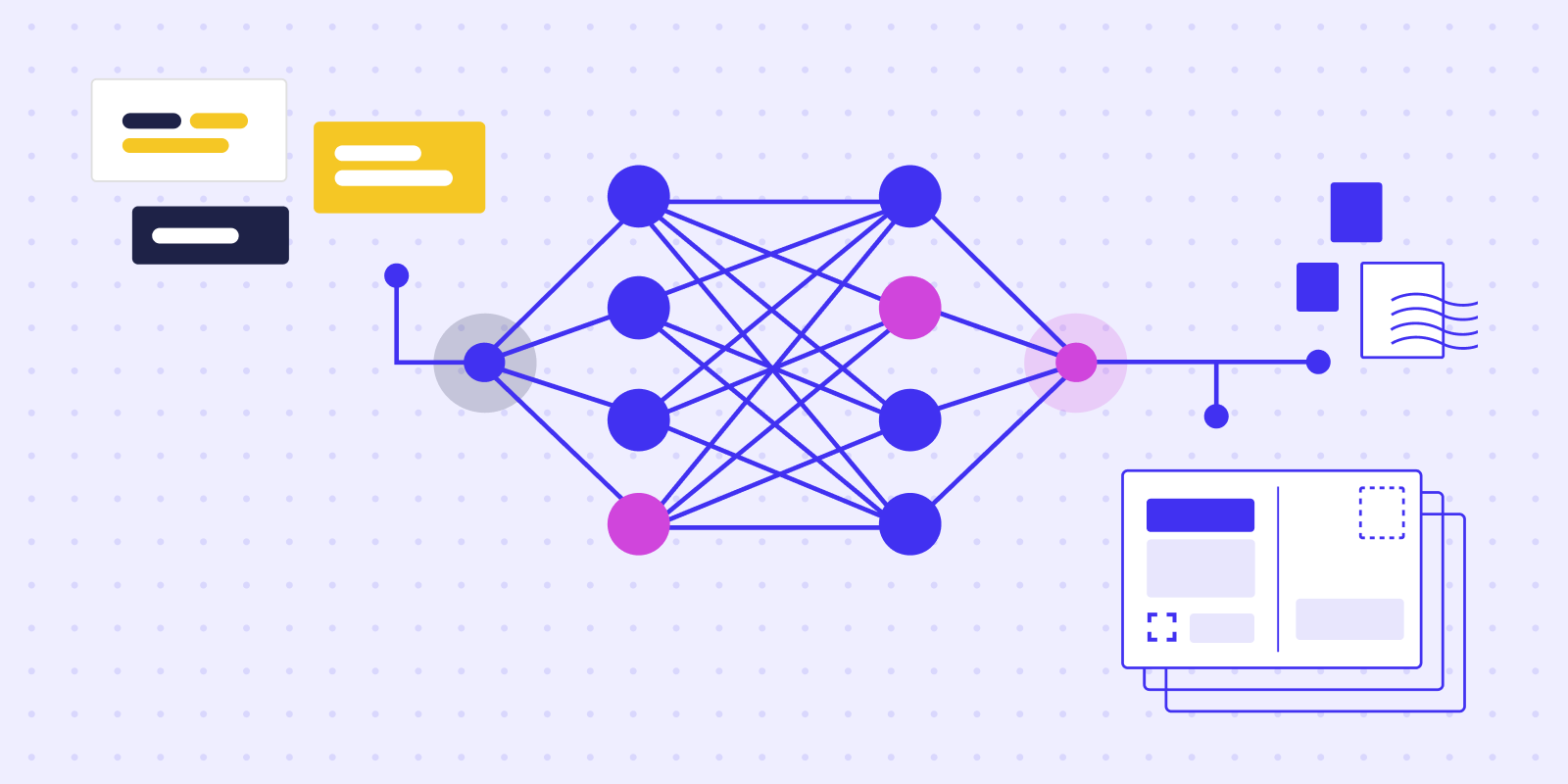
Why smarter data, better segmentation, and AI-driven targeting are becoming the new competitive edge
Direct mail has always been a high-performing channel — but what’s changing is how marketers decide who to mail, what to send them, and when. The shift toward machine learning (ML) and artificial intelligence (AI) is giving direct marketers new ways to increase relevance, reduce waste, and dramatically boost response rates.
Retailers, franchise systems, and national brands are now using AI-powered segmentation, predictive modeling, and data enrichment to uncover patterns that human analysis simply can’t see. The result: more precise targeting, more personalized offers, and more efficient campaigns.
Let’s break down how machine learning is reshaping direct mail strategy — and why marketers adopting these tools are seeing measurable lift.
Machine Learning Makes Segmentation Smarter — and Far More Predictive
Traditional segmentation relies on simple demographic or behavioral traits. Machine learning goes much deeper—analyzing hundreds of variables, purchase patterns, household changes, and behavioral signals. These segments often deliver 20–50% higher response rates because they’re built on richer patterns that humans can’t easily detect.
For national retail and franchise brands, this precision translates into:
- Better match between offer and interest
- Stronger product affinity targeting
- Fewer wasted impressions
- Significantly improved ROI
Put simply: the better the segmentation, the stronger the relevance — and the higher the lift.
AI-Driven Predictive Models Tell You Who’s Most Likely to Respond
Marketers no longer need to guess who will convert. Predictive modeling can use historical performance, first or third party data, and external behavioral signals to assign each household a likelihood to respond.
These models can predict:
- Likely buyers
- High-propensity customers
- Lapsed customers most likely to reactivate
- New movers who match ideal customer traits
- Households likely to convert with the right offer
- Customers who respond only to certain product categories
By ranking households on propensity, marketers can shift from “mail everyone” to “mail the households that matter.” This typically reduces waste by 15–40% while increasing conversion.
AI turns direct mail into a smarter investment rather than a broader one.
Data Append + AI = More Complete Profiles and Better Targeting
Machine learning becomes even more powerful when combined with enriched data.
Brands are now appending:
- Household demographics
- Transactional histories
- Lifestyle and interest data
- Mobile and web engagement signals
- New mover status
- Location-based store/proximity data
- Product affinity insights
- SKU-level buyer behavior
- Competitor information
AI then uses these expanded profiles to create more accurate segments, more relevant messaging, and more personalized offers.
This “data + AI” combination consistently improves:
- Offer selection
- Timing
- Message relevance
- Campaign sequencing
- Lifetime value prediction
The result is a direct mail experience that feels tailored, timely, and much more compelling to the consumer.
Why AI Is Increasing Response Rates — Not Just Streamlining Operations
AI and ML aren’t just helping automate the work. They’re helping marketers make better decisions that lead directly to performance gains.
Marketers using AI segmentation and predictive modeling are seeing:
- Higher match between consumer need and offer
- Better in-home timing tied to propensity models
- Reduced fatigue from over-mailing low-intent audiences
- Higher conversion on key product lines
- More effective omni-channel sequencing
In many cases, adding ML-driven segmentation alone has generated 25–60% lifts in response rates compared to traditional demographic-based lists.
AI-Powered Direct Mail + Digital Signals = Even Stronger Engagement
The most forward-thinking marketers are combining ML with web and CRM triggers. This creates campaigns that respond to real-time behavior, such as:
- Website visits
- Cart activity
- Category views
- Loyalty inactivity
- Product searches
- Online browsing history
Machine learning identifies behavior patterns, while automated workflows send direct mail at the exact moment interest peaks. These “triggered mail” programs regularly outperform standard batch campaigns by 30–70%.
When combined with QR codes, PURLs, or retargeting synced to in-home dates, performance ramps up even further.
Machine Learning Isn’t the Future — It’s the Present
Marketers who embrace AI now are gaining a meaningful advantage:
- More relevant targeting
- More accurate timing
- More efficient budgets
- Higher response rates
- Better customer experiences
- Stronger ROI
As direct mail becomes increasingly data-driven, machine learning is emerging as the engine that fuels smarter segmentation and bigger performance gains.
Ready to Integrate Machine Learning Into Your Direct Mail Strategy?
PrintComm helps retail and franchise brands apply machine learning, predictive modeling, data append, and advanced segmentation to improve results — without adding operational complexity.
From automated workflows to propensity scoring to fully personalized campaigns at scale, we make it easy to modernize your direct mail program and drive measurable lift.
If you’re looking to improve response rates, reduce waste, or integrate AI-driven targeting into your campaigns, our team is ready to help.