Retail marketers invest heavily in paid media, email, retargeting, and marketing automation to keep customers engaged.
But as digital audiences become less responsive, maintaining performance can become increasingly expensive.
More impressions don't always generate more conversions. Additional retargeting frequency doesn't necessarily bring inactive customers back.
Sometimes improving digital performance requires introducing a different touchpoint.
When coordinated with paid media and other digital channels, direct mail can reinforce marketing messages, encourage customers to re-engage, and create opportunities for more efficient retention campaigns.
The key is treating direct mail as part of an integrated marketing strategy rather than a separate campaign.
Can Direct Mail Improve Paid Media Efficiency?
Paid media plays an important role in customer retention, but repeatedly reaching the same audiences can become expensive.
For retailers managing established customer databases, direct mail offers another way to reconnect with customers who aren't responding to digital advertising.
Consider a retailer targeting high-value customers who haven't purchased recently.
Instead of relying exclusively on additional retargeting impressions, the retailer could introduce a personalized postcard featuring a relevant offer or product recommendation.
Paid media can then reinforce that message during the following days.
This creates multiple opportunities for engagement while reducing reliance on a single channel.
However, improved efficiency isn't automatic. The combined campaign must generate enough incremental value to justify the additional mailing investment.
The objective is to determine whether direct mail and paid media perform better together than digital advertising alone.
Why Coordinated Timing Matters
One of the most overlooked elements of integrated direct mail and digital marketing is timing.
A postcard arriving after a promotion expires creates a poor customer experience. An email sent weeks before the corresponding mailing may fail to reinforce the intended message.
For marketers coordinating multiple channels, the production schedule and expected in-home delivery window should inform digital campaign timing.
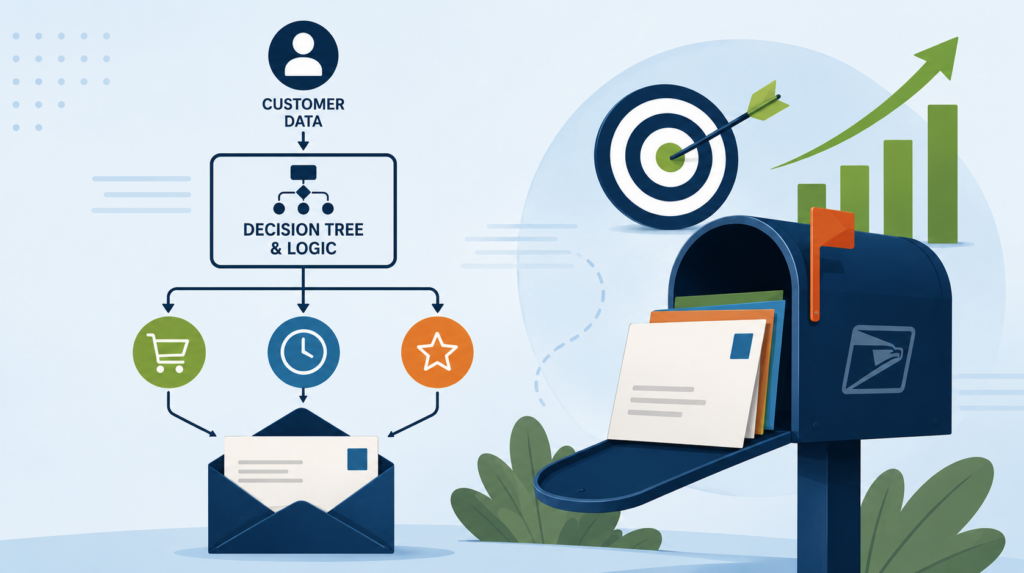
A coordinated campaign might follow this approach:
- Audience selection: Identify customers using purchase behavior, engagement history, and customer value.
- Direct mail delivery: Introduce a targeted message or offer through a personalized postcard.
- Digital reinforcement: Coordinate email and paid media around the anticipated delivery window.
- Behavior-based follow-up: Adjust subsequent messaging based on customer engagement and purchases.
The exact sequence will depend on the campaign, audience, and postal strategy.
What matters is that each channel supports the next rather than operating independently.
How Direct Mail Can Bring Customers Back Into Digital Channels
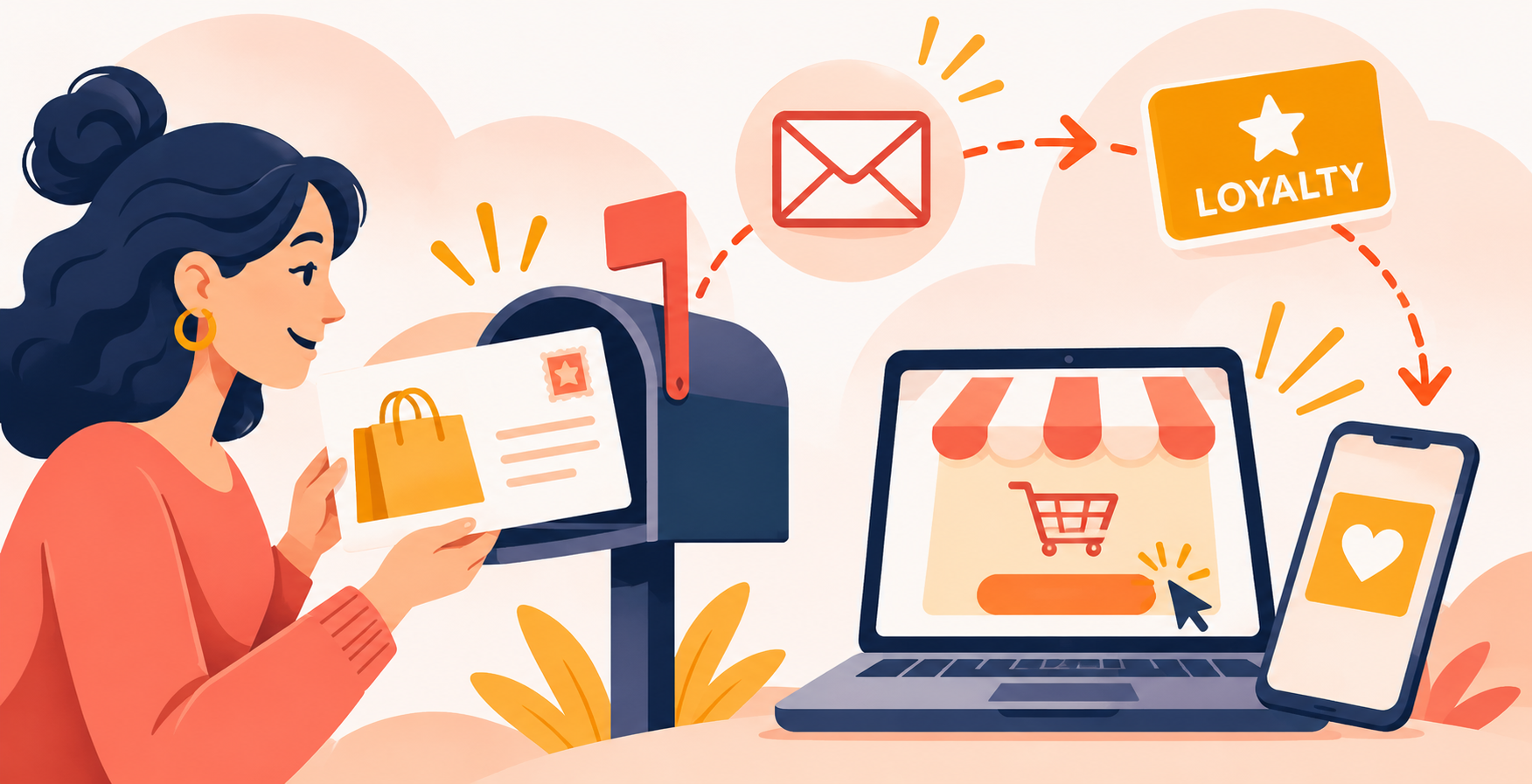
Direct mail can also serve as an entry point into digital experiences.
A postcard featuring a QR code, personalized URL, or campaign-specific offer can encourage customers to visit an ecommerce website or landing page.
From there, the customer's actions can inform future marketing communications, subject to applicable privacy and consent requirements.
For example, a retailer could mail a personalized offer to customers who haven't purchased in several months.
Customers who respond might enter an appropriate email follow-up sequence, receive updated product recommendations, or become eligible for relevant retargeting campaigns.
This creates a connected customer journey that begins with a physical mailing and continues digitally.
For retailers already investing in marketing automation, the opportunity is to use direct mail to strengthen the systems they have in place.
How Should Marketers Measure Direct Mail's Digital Impact?
One of the biggest challenges in omnichannel marketing is determining which channels actually contribute to results.
A customer may receive a postcard, see a retargeting ad, open an email, and eventually make a purchase directly through the website.
Traditional last-click attribution may credit only the final digital interaction, even when other touchpoints influenced the decision.
For marketers integrating direct mail with digital campaigns, measurement should extend beyond response rates.
Important metrics include:
- Incremental repeat purchases and revenue
- Customer reactivation rates
- Cost per reactivated customer
- Changes in email and website engagement
- Overall campaign return on investment
QR codes, personalized URLs, and campaign-specific offers can help identify engagement, but they don't capture every influenced conversion.
For a clearer understanding of incremental impact, marketers can compare coordinated mail-and-digital campaigns against appropriately designed digital-only holdout groups.
The real question isn't whether the postcard generated responses. It's whether adding direct mail improved the performance of the overall marketing program.
Better Results Come From Connected Channels
Retail marketers don't necessarily need more channels. They need their existing channels to work together more effectively.
Direct mail can provide a valuable additional touchpoint when digital engagement declines, helping reinforce messages and bring customers back into established marketing journeys.
When supported by accurate data, coordinated timing, and meaningful measurement, it can become an important component of an integrated retention strategy.
The strongest campaigns don't treat print and digital as competing investments. They measure how well those channels perform together.
Ready to Make Your Print and Digital Campaigns Work Harder Together?
PrintComm works with retailers, agencies, and high-volume marketers to support personalized direct mail campaigns, postal optimization, and coordinated marketing execution.
Whether you're looking to improve customer reactivation, complement paid media, or connect direct mail with your digital marketing programs, our team can help you identify the right approach.
Let's build a more connected marketing strategy.